- Phun With Phones
 Hold all my calls – this edition is dialing up a couple of ways to use telephones for telling codes and is mixing things up by asking you to get out your phones. Cute CommunicationsBefore smartphones with their complete keyboard layouts, typing a text was a labourious way to send a short message. The first mobile phones, and even on fixed line phones around the same time, all had a cheeky little alphabet tucked away within ten buttons. Those of us old experienced enough will be intimately familiar with repeatedly pressing the same button to cycle through to a desired … Read more
 - Snake Cipher
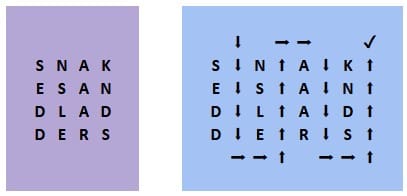 Hello coders! This edition we’re curving codes and going loopy with lines as we learn about letters leaping from language to locks! Previously we have seen the Route Transposition Cipher hyperlink: [https://eramag.com.au/sep-24/], but this one differs particularly in how our cipher text is displayed. And we are not going to be encoding our letters as something else, but our cipher will be the shape and direction we read the text in. Sliding Cipher Nice and simple for our example, we will use the game Snakes and Ladders. First put the text it into a neat square of letters … Read more
 - Talking Gibberish
 This simple grid-based cipher will have you babbling apparent nonsense to send out secret messages. Gobbledigook What we are doing in this edition is essentially taking the concept of a Polybius Square cipher (as seen in a previous edition — ERA Mag Apr23 — or knock code, but instead of being left with pairs of numbers, we will have pairs of letters that can actually be read out loud to form what seem like words. Firstly set out all the alphabet in a five by six grid (below we’ve thrown in some punctuation just to fill the space). Then frame … Read more
 - DOT CODES
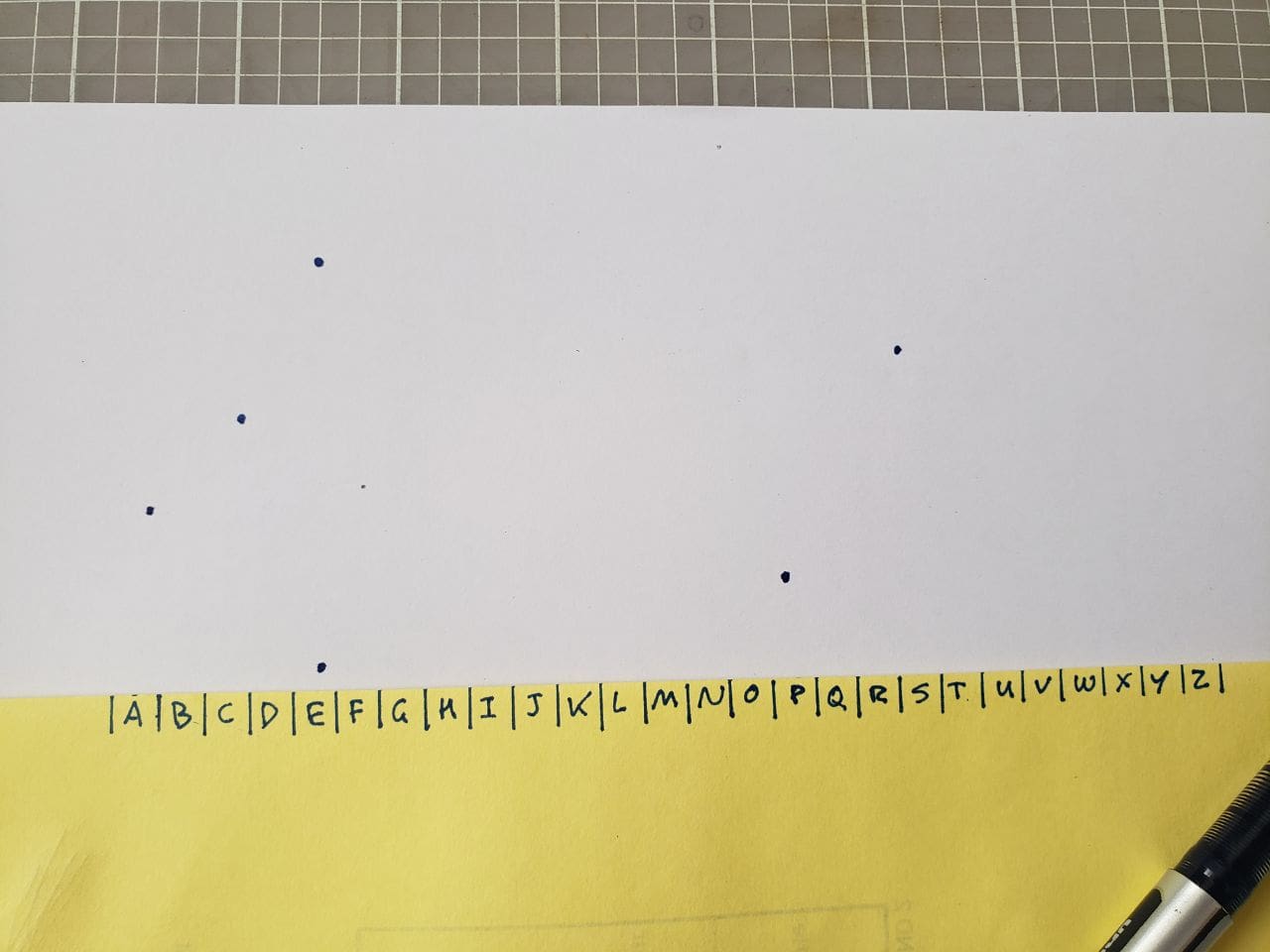 We’re doting on dottiness in our dottiest edition ever: let’s have a look at dots!The dot point version: One Thing To Rule Them AllThe most important element we need is our alphabet! Decoding this message relies on lining up letters to the markings, whatever format they are in.We need to mark out 26 sections to get little boxes to write your A-Z. The easiest way to make one is to get a standard 30cm ruler and mark out each 1cm interval, but scale this down if you need to, or just find some grid paper.Then get marking! As … Read more
 - Text Notations
 Hello code enthusiasts, this edition will have you reading about reading!Noting what you are here for, it is time to take notes on notations! A previous edition looked at the Bacon Code which also had letters of text being marked, but today’s topic has the additions spread out instead of grouped in close together. So start scanning! We are going to look at a few ways an Escape Room can mark a body of text to send a simple message. All of these have in common the following:-the message is read in the same direction as the text … Read more
 - Calendar
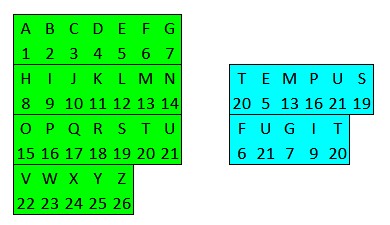 Today is the day to code!Yes my coding friends, the time has come for a new code, as this edition looks at a timely way to hide a message. It’s also a great use of old calendars. Time For Letters And NumbersOnce again we start with lining up our alphabet against the numbers 1-26 in order.Then give each letter of your message a numerical value. Time flies so hurry up! Your Days Are NumberedNext, take a page of a calendar as your reference. To make things a bit simpler, we’ve gone for the month of August 2021.Each letter’s … Read more
 - Atbash/Snail
 This time a cute little code for you to speed through, named after our favourite shelled gastropod – the snail! In this instance, our snail code is a type of cipher called Atbash. Don’t Be Shy The Atbash cipher popped up in the Bible’s Old Testament (so it’s that old), and works by lining up the alphabet to its reverse. A=Z, B=Y and onwards, as we can see with our plaintext above and our cipher text below: As you can see, there isn’t much to make this one secure. Until we start mucking around with it. Getting Up … Read more
 - Cistercian Numerals
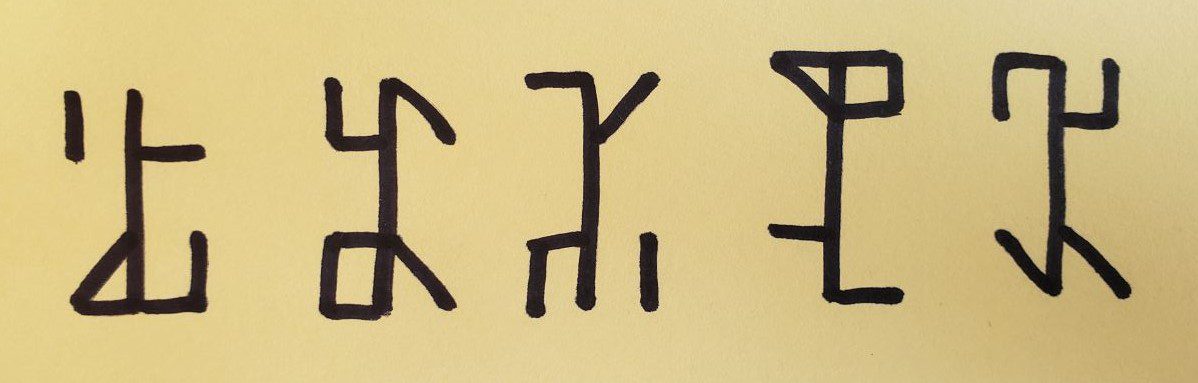 This edition has a code you can really count on in tight quarters. No, this not another symbol-based cipher, these are glyphs that actually represent the numbers: 5762, 9483, 8613, 2159, 3478. But why? We’re looking at a system of writing numbers from the Cistercian religious order (pronounced siss-TER-shun). Named after a French town, these 13th century monks had enough of the Roman numeral system and its alphabet soup, and the Hindu-Arabic system was yet to be widely used. This compact combination of constructions connected to a core column became their continent kept count for a couple of … Read more
 - Route Transposition Cipher
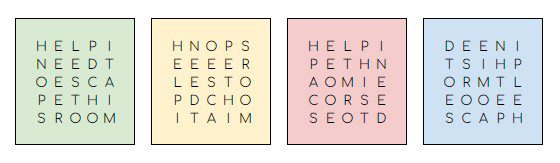 Come with us now, on a journey through time and space – well, maybe just a path of letters and directions. It’s another transposition cipher this episode, a cousin of our Rail Cipher [July 2023 edition]. This means that we are not going to change the letters themselves – just the geometric order of how we read them. Alternative Routes To demonstrate a few variations, let’s first take a quick message and trace it through some basic formats: In Green we have a standard reading style across lines; in Yellow reading downwards in columns; in Red reading clockwise … Read more
 - Rebus Puzzles
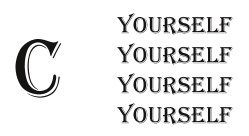 Pictograms, dingbats, old-school emojis: they’ve had a few names – let’s look at Rebus puzzles! What is a Rebus puzzle? Originating with heraldry and writers wanting to draw pictures instead of spelling out every word, today a rebus can make a fun little extra in an escape room. We have two main types: pictures for words, and words for words. These Can Be A NEPAINCK By strategically arranging letters and words, we can add a little extra step in reading a message. Go from a range of emotion from “I <3 U” to “I H8 U”, or give … Read more
 - Substitution Ciphers
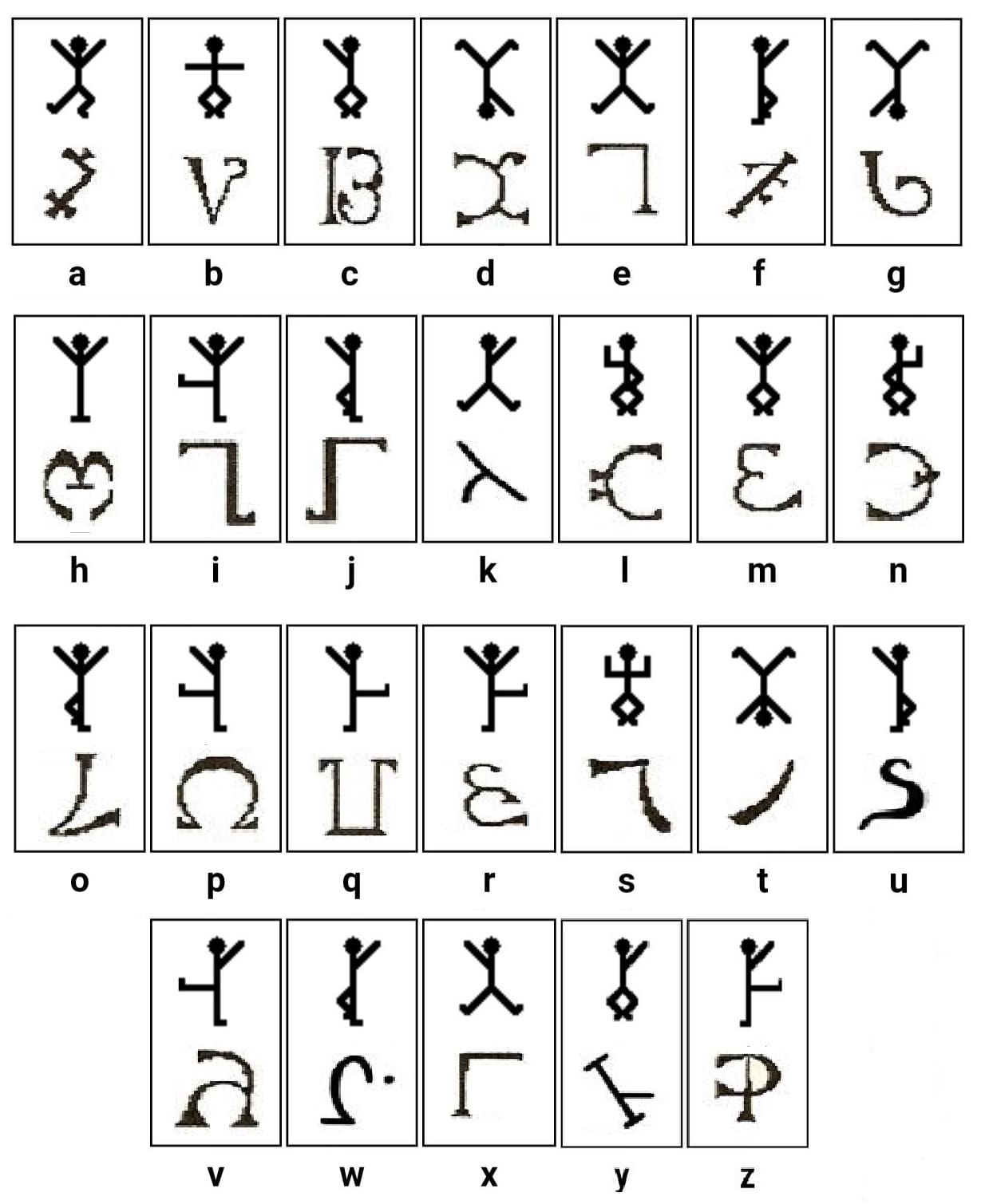 Hello friends, this edition we are swapping back to something simple – substitution ciphers. A while back we looked at Symbol Based Ciphers specifically, but this time we look further what we can do with a whole range of ciphers in this style. What Is A Substitution Cipher? This is anything that is a straight and simple swap of one value to one letter (in our case with one part of it being English), also called a monoalphabetic cipher. One thing will always equal a set other thing when encoded, so look for A=1, B=2, C=3, etc. Historical … Read more
 - Acrostics and Indexing
 Hello escapers! This edition is going to focus on hiding messages in plain (and not so plain) sight! Basic, Easy, Tiny Acrostics Here is the most basic acrostic to hide a code in: That’s our acrostic, reading straight down, just the first letter of each word. You could also have a telestitch, which is the last letter of each word: Whack your code in the middle of your words, and you have created a mesostich: Step this up a level in difficulty and make your message from the first AND last letter of your words for a double … Read more
 - Morse Code
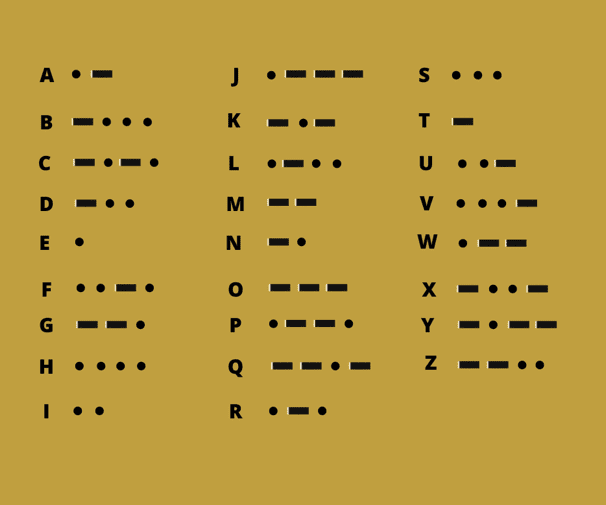 A true legend among codes, Morse may be both the most easily identifiable and easily disguisable codes around. This system of dots and dashes – or dits and dahs depending on your outlook – remains one of the most reliable and well-known systems of encoding information. Morse History Facts Morse code has played an incredible role in shaping the world as we know it, even beyond coding. Samuel Morse, having already revolutionised communications with the electric telegraph in the 1830s, gave all its users a simple yet efficient system to use for sending cables and telegrams first locally … Read more
 - Vigenère Cipher
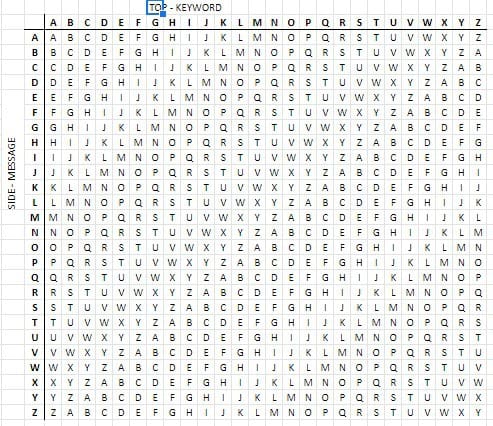 Let’s mix up the Code Column for this edition and go big. Look out mobile users! This is a step up from the more basic substitution ciphers we’ve looked at over the past year. Blaise de Vigenère developed this table (or square) using alternate alphabets to create coordinates for shifting letters into a code, one which needed insider knowledge to decipher (without great effort anyway). Putting codes on the table To play with this cipher we need three things: Firstly, a Message. This is the really important stuff. In fact, let’s use that. REALLY IMPORTANT STUFF Old mate … Read more
 - Turning Grille
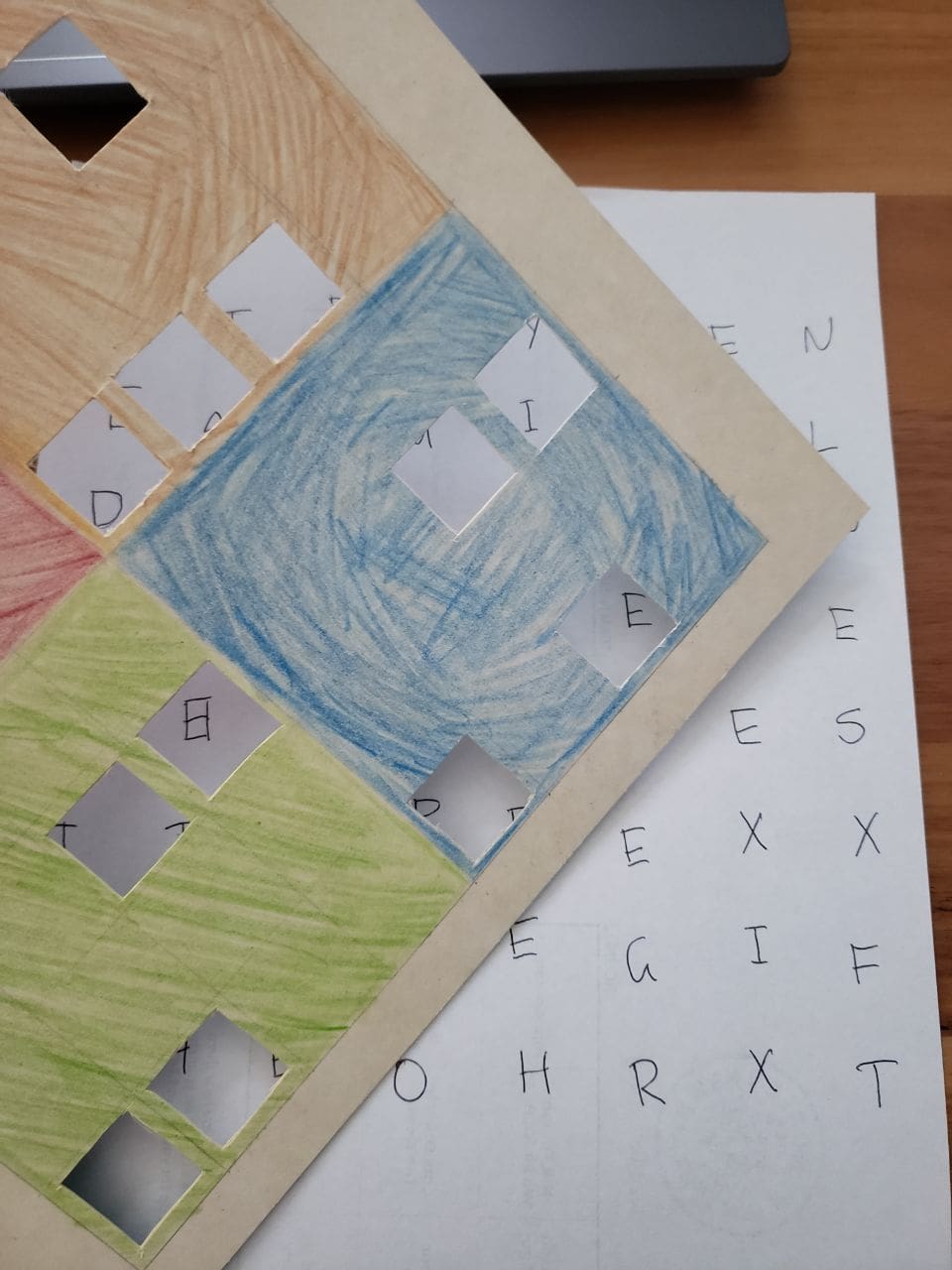 This edition we are looking at another type of grille, following on from our earlier article on the grilles developed by Richelieu and Cardano. Our variant this time was made by an Austrian cavalry officer back in 1880: Edouard Fleissner von Wostrowitz. Fortunately for us, this one has become known more simply as the ‘turning grille’. Why? Get your paper and scissors and we can find out! Turning To Arts And Crafts First up, get either some stiff paper or a sheet of card. Cutting up a cereal box will do a great job. Mark out a square … Read more
 - Rail Cipher
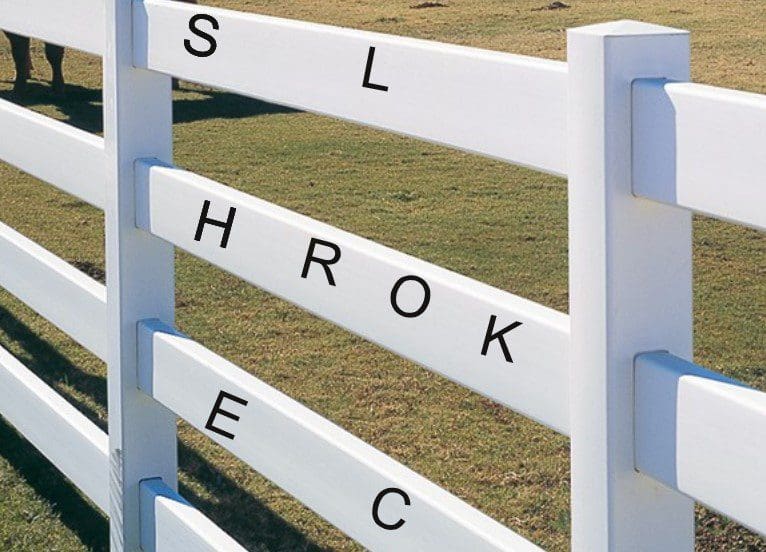 At first this might seem a simple cipher, but taramnntigsiteogetidohniltl (14/13). Our rail fence system is one of the earliest methods of transposition, based on placing letters in a series of levels, or, imagining that they have been written up and down the rails on a fence. Let’s have a look at a few quotes from this guy as examples to see how it works. Fencing for beginners Our most basic version of this has just the two levels. Start with your text: “Elementary, my dear Watson” Take out all the punctuation and spacing (note: this isn’t always … Read more
 - Polybius Square
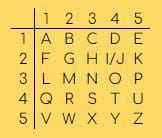 Who’s This Square? Old mate Polybius was a Greek born about 200BC, but the method he made famous has influenced more sophisticated systems to this day. Originally, old mate Polybius had intended this code to be used in conveying messages long distance by moving a flaming torch up and down in sequence, with the message passed from tower to distant tower. Squaring Things Up First we need a little table of our alphabet. This cipher typically combines the letters ‘i’ and ‘j’ in one cell. Each letter of the alphabet has its own grid reference. ‘A’ is 11, … Read more
 - Bacon Code
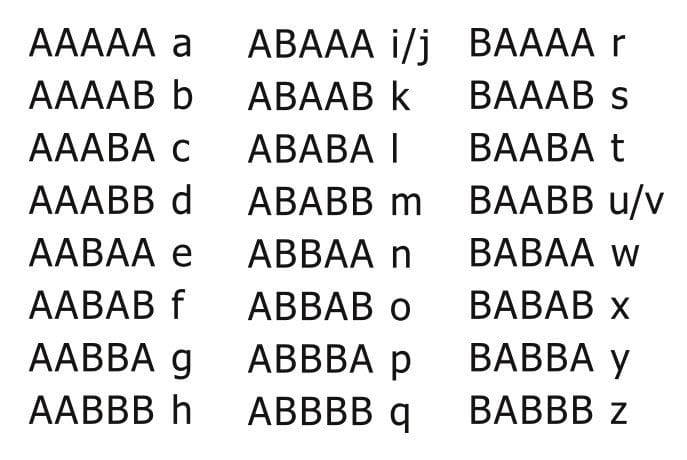 Our next project is the Bacon Code. It’s an older code, but it definitely still checks out. This episode’s man with the plan is philosopher, statesman and “father of empiricism”, Sir Francis Bacon. While most of our ciphers and codes (Morse, Pigpen, etc) are fairly secure, they are pretty obvious as being secret messages. Steganography seeks to hide the fact that a coded message exists, and our mate Bacon used a concealment method known as a ‘semagram’, a message hidden in an openly visible and non-jibberish-looking piece of writing. OINK oink At its core, the Bacon code just … Read more
 - Mary Queen of Scots Cipher
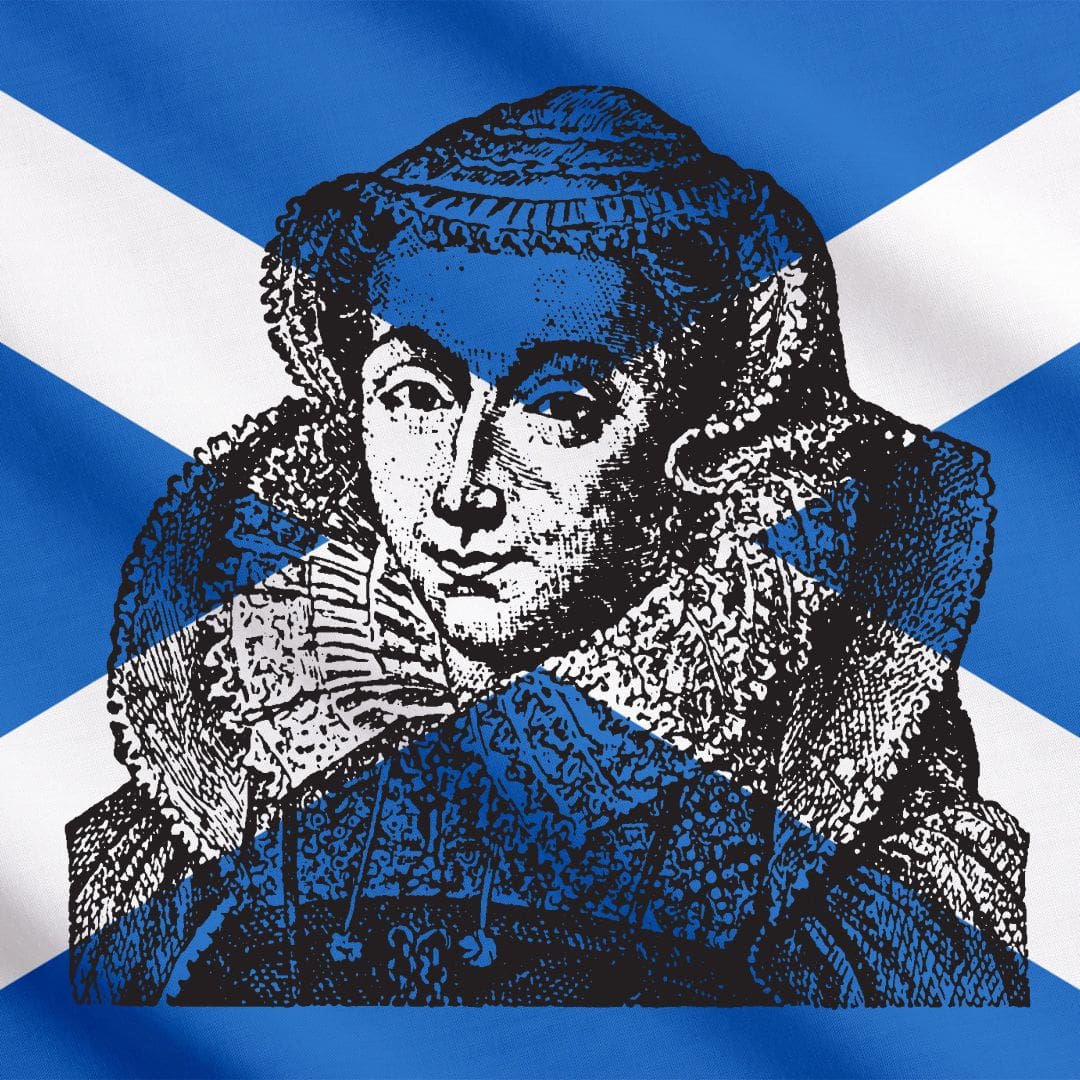 We’re back to a substitution cipher in this edition, but one with a special twist. All my 1990s Microsoft Word users might see echoes of the Wingdings font (which isn’t a bad place to start if you want inspiration for your own symbol creation), but this one goes back a lot further than that. The cipher system we are looking at now was developed in the 16th Century by Mary Stuart in captivity. The then Scottish Queen was trying to contact her supporters. The young royal was found to have used 100 iterations of her cipher, which used … Read more
 - Grille Ciphers
 Grille A grille, also known as a cutout, is a great way to hide your message away in text that you know will be seen no matter what. We aren’t going to try and hide this text, only our intended message. Prepare for arts and crafty codes! Our old French mate Cardinal Richelieu, is credited with coming up with method of concealment back in the 1600s, cutting holes in a card to plot out a message, then hiding it within a larger block of text that looked like an innocent letter. Grilling 101 Step 1: Figure out what … Read more
 - Dot Ciphers
 Here’s a code that will put a spot of colour into your Escape Room experience! The Colour Dot cipher is a way to substitute letters of the alphabet for splashes of colour, via numbers used in easy sums that are then swapped out. It might not be a code that you have encountered before, but it is definitely one that will brighten up any puzzle. Get out your crayons! For this we don’t actually want your full set of Derwents, with just nine colours recommended.We need to choose some that are distinct enough from each other so as … Read more
 - Semaphore Cipher
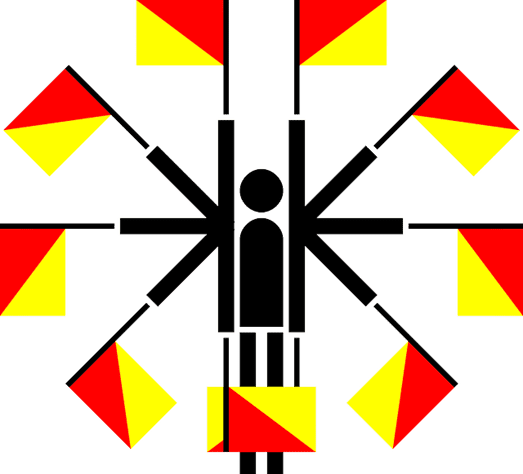 You may not have heard of a semaphore before, but it is most often recognised in fields where technicians and workers communicate with flags (such as in the navy). Now, you might be wondering, how can this type of system make its way into games, puzzles and escape rooms? Well here’s a surprise: It’s not limited to flags! Everything from smoke signals to blinking lights qualify as a semaphore as long you are using them to send a coded message. And unlike other ciphers, a semaphore is not necessarily limited to just using the letters of an alphabet. … Read more
 - Combination Ciphers
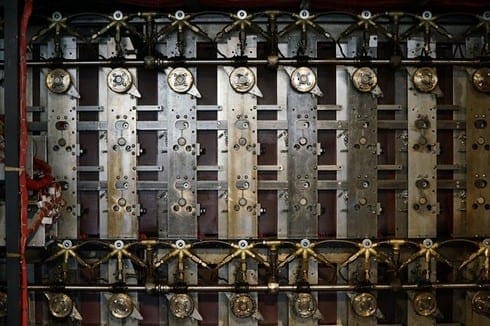 For code makers and puzzle designers, sometimes it is not enough to use a single cipher. This isn’t even because today’s technologies can easily spot what kind of cipher is being used at any given time. It is also because many individual ciphers are so well-known and recognisable that even the average escape room player can instantly identify them. (You can certainly thank the internet for that!) There is no doubt this has led many designers to consider bolder, more complicated and ambitious systems of code making. Today, it may not even be enough to use fancy symbol-based … Read more
 - Symbol-Based Ciphers
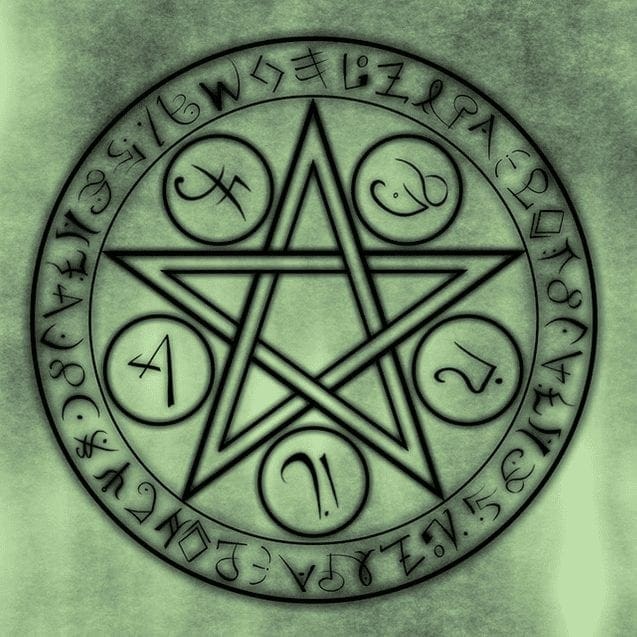 For a lot of casual code breaking enthusiasts, most ciphers are pretty recognisable. They often still use letters and a particular format (such as letter substitution). In fact, even something like a pigpen cipher can be easily identified once you know how the basic corners, squares and dots of its messages are actually made. But today, there are plenty of escape rooms and games who have gone beyond just using conventional formats. These take the simple act of letter substitution while using a cipher that has symbols inspired by ancient glyphs or letters entirely made up. Thus, we … Read more
 - Caesar Ciphers
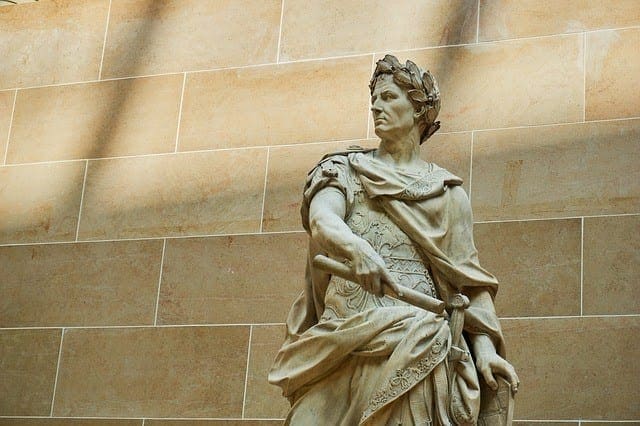 Last time, we discussed one of the most classic ciphers that are found in many escape room games. But in this month’s installment, we’ll be covering a cipher that has literally been with us since ancient times. The Caesar Cipher The Emperor’s Biggest Secret As the name implies, the Caesar cipher was famously used by Julius Caesar during his military campaigns. It uses letter substitution (the oldest cipher technique) by substituting one letter with another. These ciphers almost always operated by manipulating the order of the alphabet like this: ABCDXYZA The upper set of letters belong to the … Read more
 - Book Ciphers
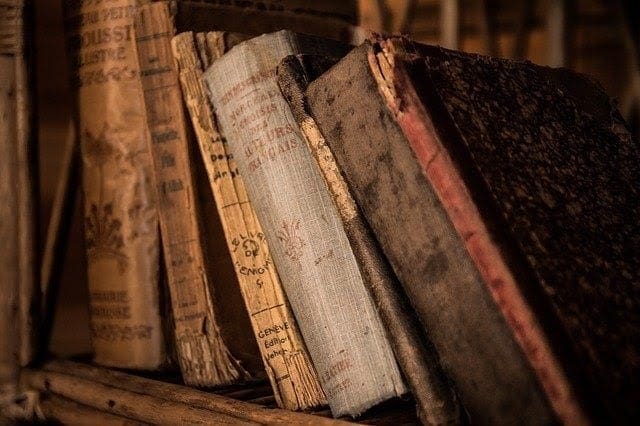 One of the most exciting elements about an escape room experience is that it introduces people to the world of cryptography. After all, solving an escape room challenge is more than just about finding clues and hidden switches. Ciphers and secret codes also play major, if not pivotal, roles! In fact, whether you’ve encountered them in live escape rooms or played with them in escape room video games, the use of various ciphers is incredible. That’s why for each month, we will be covering just some of the most popular ciphers used in escape room games. Our first … Read more