

Hold all my calls – this edition is dialing up a couple of ways to use telephones for telling codes and is mixing things up by asking you to get out your phones.

Cute Communications
Before smartphones with their complete keyboard layouts, typing a text was a labourious way to send a short message. The first mobile phones, and even on fixed line phones around the same time, all had a cheeky little alphabet tucked away within ten buttons.
Those of us old experienced enough will be intimately familiar with repeatedly pressing the same button to cycle through to a desired letter for minimal textual output. Even in 2010, 140 characters of text would cost you 25c. Times have changed, and now we can use this as a simple numerical representation to puzzle through.

Padding Out A Message
Above is a classic ‘brick’ number pad. With ‘1’ left blank, a user would press the other numbers until the desired letter came up: press ‘2’ once for the letter ‘A’, twice for ‘B’ and thrice for ‘C’. As well as using ‘0’ to insert a space, the buttons most commonly known as star and hash: ‘*’ and ‘#’ would give various forms of punctuation.
As an example, typing out “SOS” would require 11 taps: four taps on ‘7’, three on ‘6’, and another four on ‘7’.
SOS = 7777666777
Unlocking The Phone
To decode this should be pretty straight forward: move along the button that matches your number the same amount of times that number occurs.
Where it can get fidgety is with consecutive letters that are assigned to the same button, and double letters. Placing a space between your numbers when conveying them in written form will help avoid confusion.
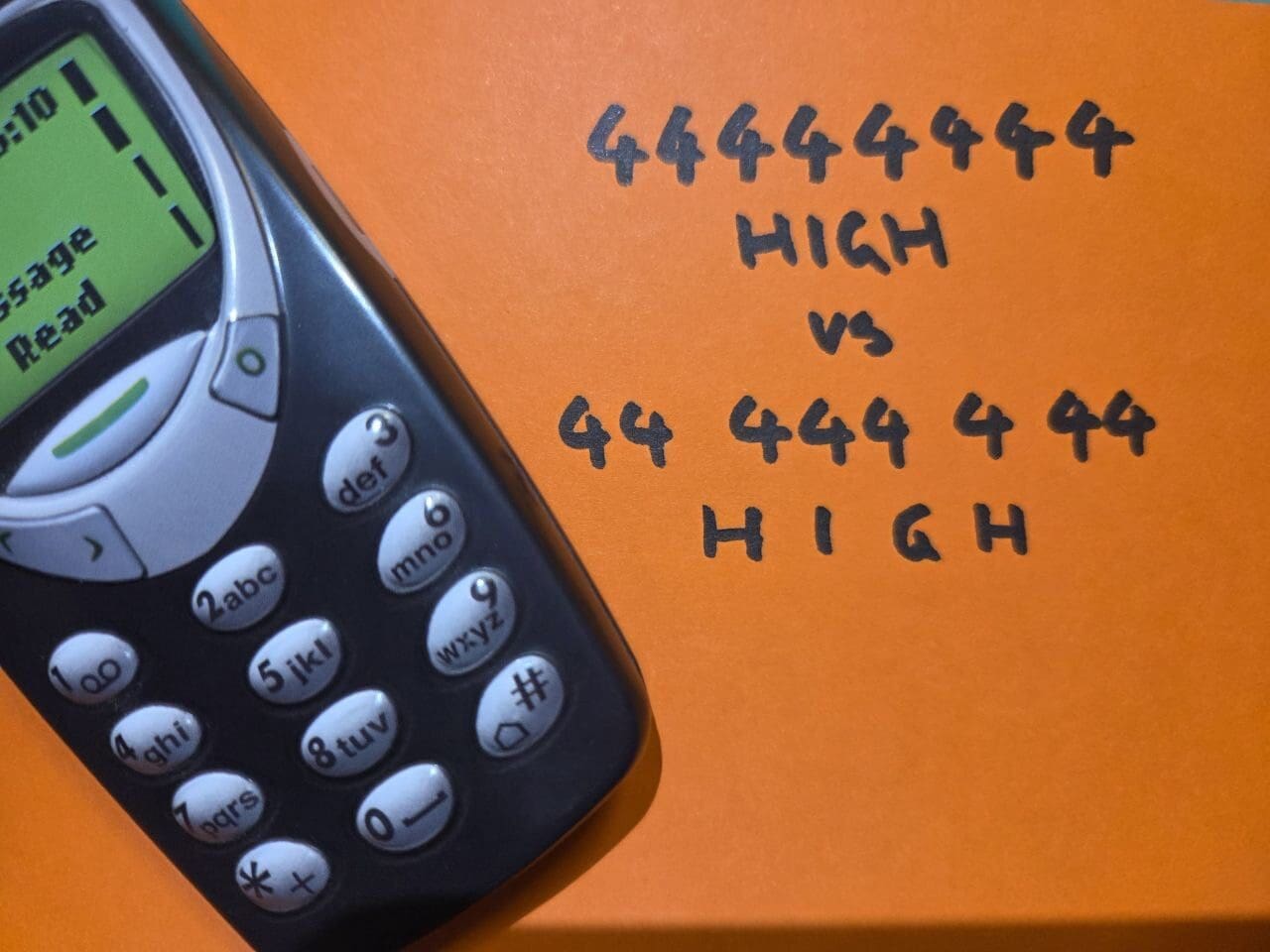
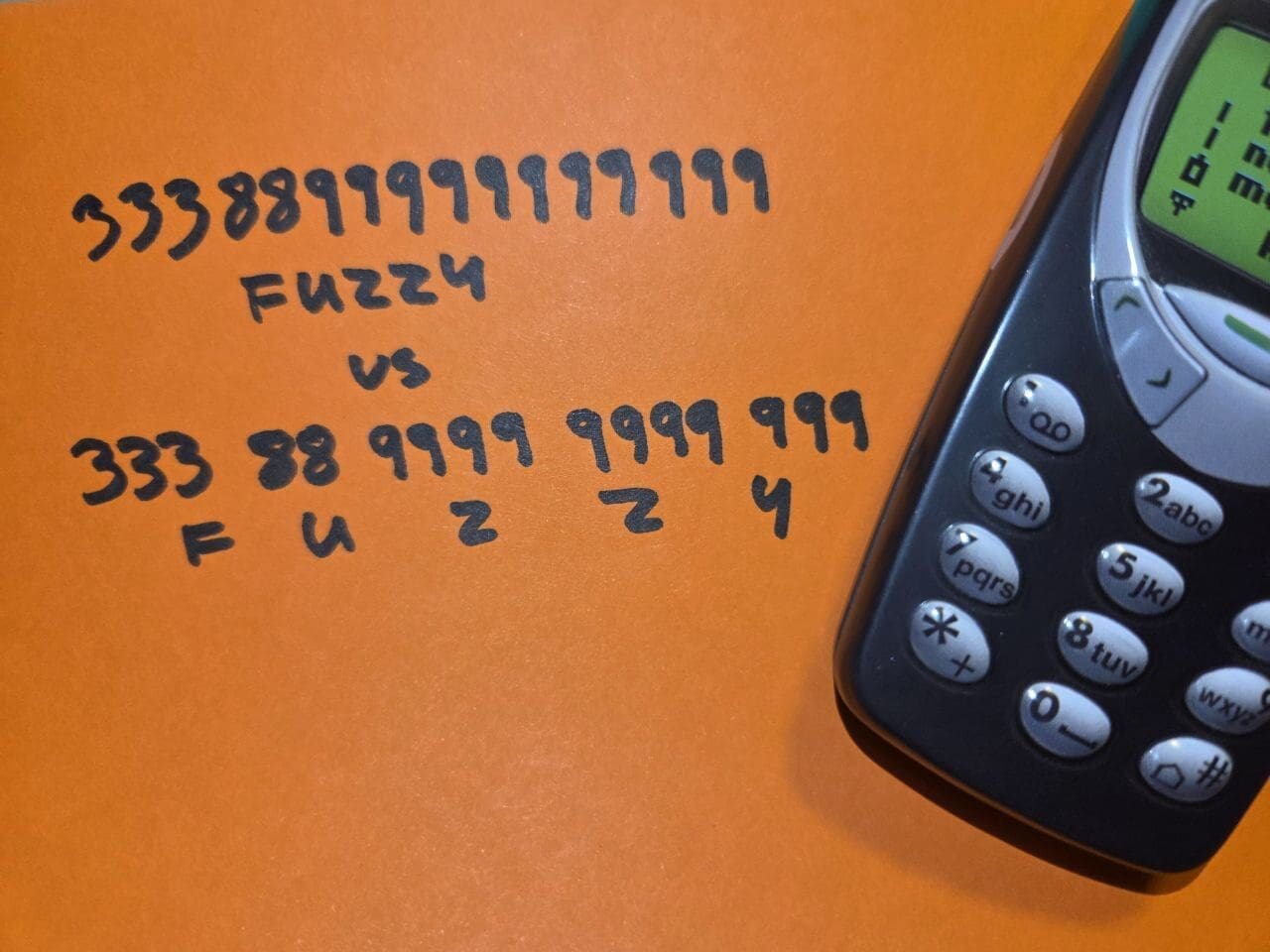
Getting a Clear Signal
Keep an eye out for this code in Escape Rooms especially themed around the 90s and into the start of the 21st millennium. The repeated numbers (and lots of them) should help you recognise the use of the number pad. As always, a decoding reference will be found somewhere in the room: don’t assume that the designers have necessarily kept the alphabet used in the same order.
Happy Escaping